
Managing finances has never been easier, thanks to AI-powered budgeting apps. These tools automate expense tracking, analyze spending habits, and offer personalized financial insights, helping users save money and plan for the future. In 2025, the top apps include:
Mint (now integrated with Credit Karma): Formerly a favorite, now discontinued but features live on in Credit Karma.
Cleo: A chatbot offering tailored budgets, humor, and motivation to improve savings.
Personal Capital: Combines budgeting with investment tracking and long-term planning tools.
Monarch Money: Subscription-based with smart categorization and goal tracking.
Plum: Automates savings based on spending patterns and future bills.
Rocket Money: Tracks subscriptions, negotiates bills, and provides spending insights.
YNAB (You Need a Budget): Focuses on zero-based budgeting with AI-driven updates.
PocketGuard: Shows real-time spendable cash after accounting for bills and savings.
Goodbudget: A digital envelope system for manual budgeting enthusiasts.
Quicken Simplifi: Simplifies financial tracking with secure bank integration and goal tracking.
Each app offers unique features, from automated savings to investment tracking. Whether you're saving for a goal or managing daily expenses, these tools can help. Pricing varies, with free and subscription-based options available. Choose the one that fits your financial style and goals.
How to use AI and free apps to build a better budget in 2025
1. Mint
Mint, once a go-to app for budgeting, officially shut down its standalone service on March 23, 2024, as its features were incorporated into Credit Karma.
Current Status and Transition
Intuit, the company behind Mint, made the decision to discontinue the app and shift its users to Credit Karma. According to an announcement on Mint's website:
"Mint has been reimagined on Credit Karma. Reviewing transactions, monitoring your spending and tracking your net worth now have a new home."
Key features that Mint users relied on, such as expense categorization and budget tracking, have been folded into Credit Karma's platform. However, the interface and overall experience on Credit Karma differ from the original Mint app. This change reflects the growing role of AI in reshaping budgeting tools, leaving users to adapt or search for alternative solutions.
What Mint Offered Before Shutdown
Before its closure, Mint provided free tools for budgeting, including automated expense categorization, transaction tracking, and spending alerts. These features were eventually integrated into Credit Karma, making Mint’s premium ad-free plan unnecessary.
Impact on U.S. Users
Moneywise.com reported:
"On Oct. 31, 2023, Mint announced they will be shutting down. They will 'ensure a smooth transition for Minters who decide to onboard to Credit Karma.'"
For users, the shutdown meant finding new ways to manage their finances, especially those who valued Mint’s comprehensive tracking and automated insights. This shift illustrates how older apps are being overhauled with AI capabilities, paving the way for more advanced budgeting tools.
As of 2025, Mint is no longer a standalone option, pushing users to explore other AI-driven financial apps.
2. Cleo
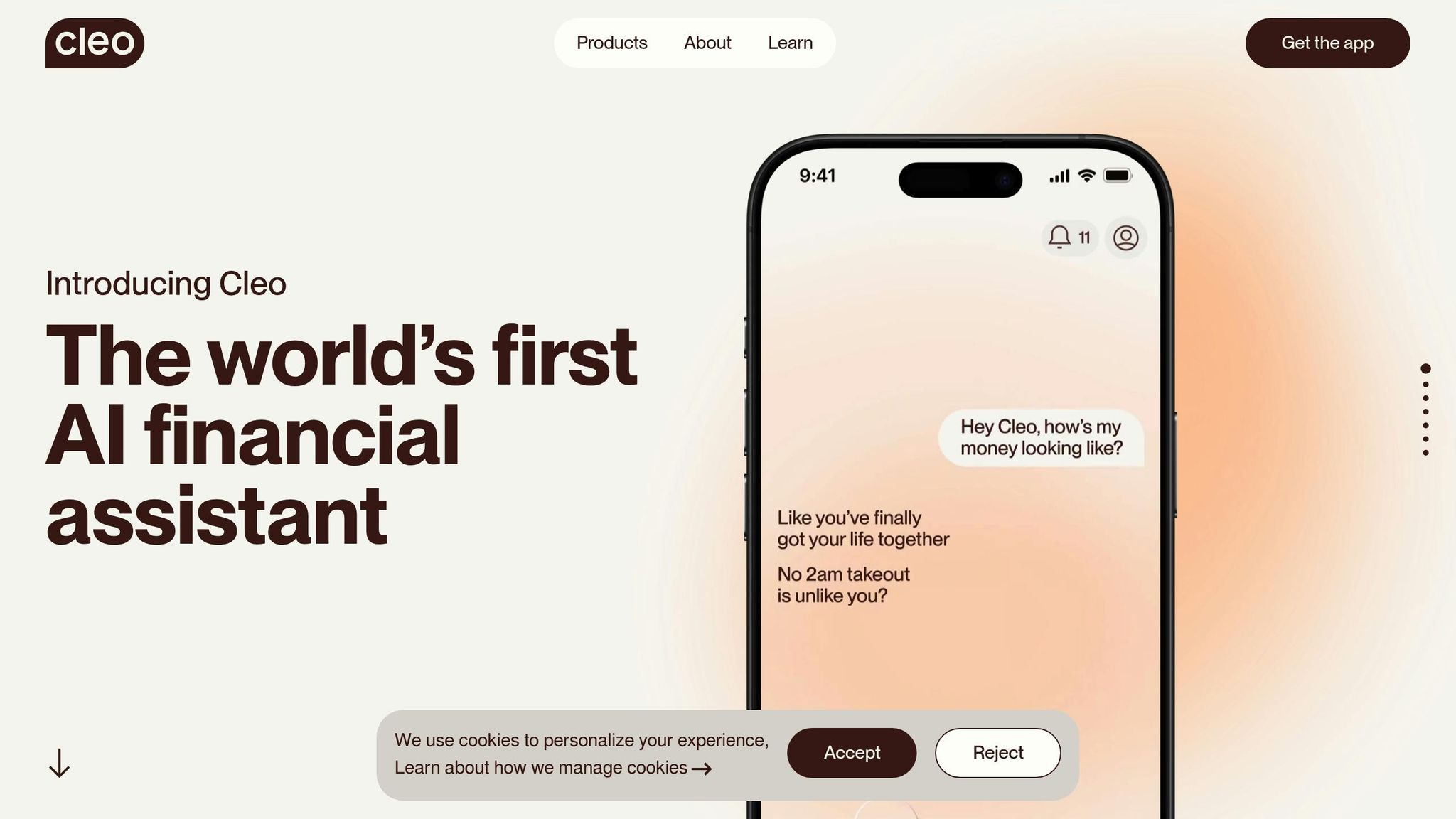
Cleo is an AI-powered chatbot that takes a conversational approach to budgeting. As of October 2023, the app has attracted over seven million users, mostly in the U.S., by transforming traditional financial management into a more interactive and engaging experience through its chat-based interface.
AI-driven Budgeting Features
Cleo doesn’t just track expenses; it uses machine learning to analyze your spending habits, income patterns, and financial goals. With this data, it provides tailored budget recommendations and predictive insights designed to fit your unique financial situation.
What sets Cleo apart is its conversational tone, which makes managing money feel more like chatting with a witty and supportive friend. The app offers two distinct interaction modes:
Roast Mode: A playful, humorous approach that calls out questionable spending habits.
Hype Mode: A motivational style that celebrates your financial wins.
"We're on a mission to help everyone live beyond the next paycheck, implementing AI effectively to help our users feel less stressed about their money." - Cleo
The results speak for themselves: Cleo users report an average 25% increase in monthly savings. In 2023 alone, the app helped users avoid nearly two million declined transactions or overdrafts, and 34% of users set up a budget within the year.
Cleo also offers flexible pricing plans to suit a variety of financial needs.
U.S. Bank Integration and Compliance
Cleo integrates with U.S. banks through Plaid, ensuring secure and seamless connections for managing your finances. The app’s advanced data analysis and proactive alerts help users avoid overspending by notifying them before it happens. These features are particularly appealing to millennials and Gen Z, who value intuitive and forward-thinking financial tools.
Pricing (in USD)
Cleo provides three pricing options to cater to different financial goals:
Free Version: Includes basic budgeting tools, spending categorization, monthly expense breakdowns, and standard bank account connections.
Cleo Plus ($5.99 per month): Offers higher cash advance limits, custom categories, salary advance features, enhanced savings challenges, detailed spending insights, and priority customer support.
Cleo Builder ($14.99 per month): Adds a Credit Builder credit card, credit score monitoring, regular credit reporting, automated payment scheduling, and advanced tools for tracking financial goals.
These pricing details have been confirmed through multiple sources.
Benefits for U.S. Users
Cleo has earned a 4.5-star rating in app stores, with over one million downloads. Users frequently highlight the app’s simplicity and effectiveness in helping them save money. With more than four million downloads across the App Store and Google Play, Cleo has become a go-to option for U.S. consumers looking for a fun and engaging way to manage their finances.
3. Personal Capital
After exploring Cleo, let's shift our attention to Personal Capital, another AI-powered platform designed to simplify budgeting and investment tracking. This tool combines automated features to help users manage their daily expenses while keeping an eye on long-term financial goals.
AI-Powered Budgeting Tools
Personal Capital's AI engine automatically organizes transactions from linked accounts, giving users a clear picture of their spending habits. Key features include:
Cash Flow Tool: Tracks past spending patterns to predict future cash needs.
Net Worth Tracker: Combines assets and liabilities to provide a complete financial overview.
Fee Analyzer: Identifies hidden fees in investment accounts, helping users save more over time.
Secure Bank Integration and Compliance
Personal Capital connects securely with major U.S. banks using encryption that meets industry standards. As a registered SEC investment advisor, it ensures your data is safe with read-only access, so your financial information stays protected.
Pricing (in USD)
The platform operates on a freemium model, offering a range of budgeting tools at no cost. For those seeking professional wealth management, advisory services are available with tiered pricing based on the amount of assets under management.
Why U.S. Users Love It
Personal Capital is particularly popular among U.S. users for its ability to combine everyday budgeting with long-term financial planning. Its Retirement Planner uses Monte Carlo simulations to show how current spending can affect future financial security. Plus, the highly rated mobile app makes managing your finances convenient and accessible, solidifying its reputation as one of the top financial tools in the U.S.
4. Monarch Money

Monarch Money is a subscription-based budgeting tool that uses AI to provide advanced expense tracking and personalized financial insights.
Smart Budgeting Features
Monarch Money uses AI to analyze your spending patterns and offer tailored budget suggestions. Its Smart Categories automatically sort transactions, even accounting for one-time expenses. The Cash Flow Forecasting tool evaluates your past spending and upcoming bills to predict future account balances. Additionally, the Goal Tracking feature helps you monitor your financial progress and suggests adjustments to stay on track. These tools work seamlessly alongside its secure financial integrations.
Secure Bank Connections
Monarch Money connects to major U.S. banks and credit unions with encryption and read-only access. This ensures your data is transmitted securely without storing sensitive information like passwords.
Pricing Plans
Monarch Money offers both monthly and annual subscription options, with annual plans providing better overall value. The pricing reflects the premium features and services included.
Tailored for U.S. Users
Designed with American users in mind, Monarch Money is particularly useful for managing multiple income sources or joint finances. It integrates smoothly into broader financial planning strategies, making it a valuable tool for achieving financial goals.
5. Plum
Plum is a savings and budgeting app powered by AI that keeps an eye on your spending habits, organizes your transactions, and automatically moves extra funds into a savings account. It tailors this process based on your income, expenses, and any upcoming bills.
AI-Powered Budgeting Tools
Plum takes a deep dive into your transaction history in real time to spot opportunities for saving. It calculates how much you can safely set aside by analyzing your regular expenses and future bills. Plus, it works seamlessly with major U.S. banks, making it easier to manage your finances all in one place.
Secure Bank Integration and Compliance
Plum uses strong encryption and read-only access to connect securely with numerous U.S. banks. It complies with U.S. financial regulations and undergoes regular security reviews to ensure your data stays safe. You’re always in control - connected accounts can be disconnected anytime through the app's security settings.
Pricing Options
Plum runs on a subscription model, offering both basic and premium plans. Both plans include automated savings and spending reports. You can also try it out with a free trial and cancel whenever you like (note that standard bank fees may apply).
Why U.S. Users Love Plum
Plum's smart technology is especially helpful for those with irregular incomes, like freelancers or gig workers. It helps build an emergency fund while keeping your finances secure and compliant with U.S. regulations. Whether you choose the basic or premium plan, Plum provides tools to automate savings and track spending effectively.
6. Rocket Money
Rocket Money is your go-to tool for keeping track of expenses, managing subscriptions, and fine-tuning your budget. Let’s dive into how Rocket Money uses AI to make budgeting smarter and more efficient.
AI-Driven Budgeting Features
Rocket Money leverages AI to simplify the budgeting process. It automatically categorizes your transactions and identifies recurring subscriptions, giving you a clear picture of where your money is going. By analyzing your spending habits, the platform offers tailored insights to help you manage your budget more effectively.
U.S. Bank Integration and Security
Rocket Money connects seamlessly with major U.S. banks and credit unions, ensuring a secure experience. Using strong encryption and read-only access, it prioritizes the safety of your financial data while delivering a hassle-free connection to your accounts.
Pricing
Rocket Money operates on a freemium model, catering to both casual users and those seeking advanced features. The free version includes essential tools like expense tracking and account connectivity. For those wanting more, the premium subscription unlocks advanced features and personalized insights. Plus, there’s a trial period to explore these premium perks before committing.
Why It’s Great for U.S. Users
Rocket Money is a helpful tool for simplifying financial management. Its user-friendly dashboard consolidates your financial information, making it easier to monitor spending across multiple accounts. The AI-powered insights highlight spending patterns and potential savings, making it an excellent choice for busy professionals looking to stay on top of their finances.
7. YNAB (You Need a Budget)
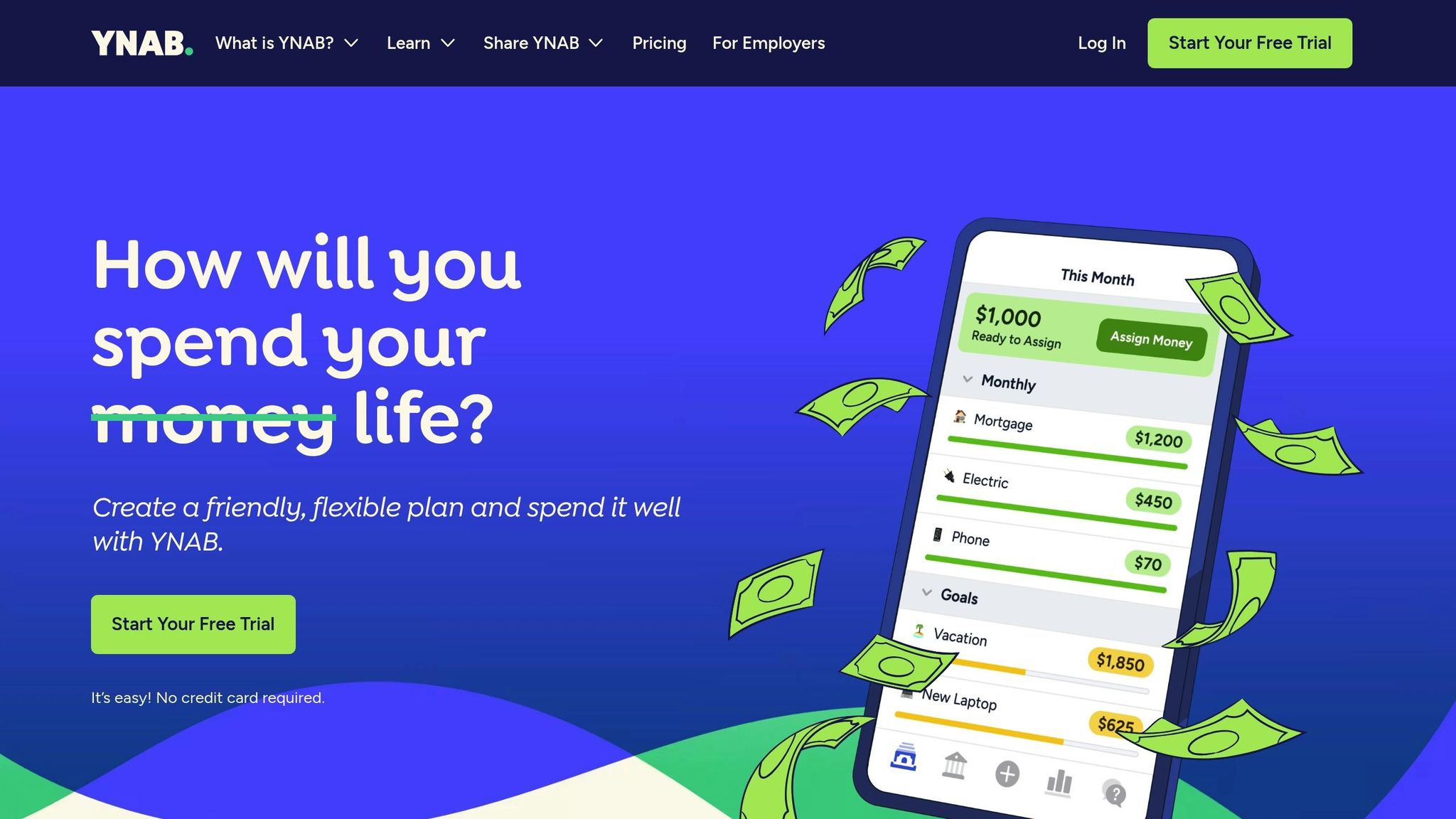
YNAB takes a proactive approach to budgeting by assigning every dollar a specific purpose, helping users escape the paycheck-to-paycheck cycle.
AI-Driven Budgeting Features
YNAB is widely recognized for its hands-on budgeting style, but recent updates have introduced automation to make the process even smoother. For instance, transactions imported from linked bank accounts are now automatically categorized into budget categories. This feature allows you to review and tweak your allocations as needed, combining the convenience of automation with the mindfulness of manual adjustments. These updates work seamlessly alongside YNAB's well-established bank integration capabilities.
U.S. Bank Integration and Security
YNAB connects with a wide range of U.S. financial institutions, including major players like Chase, Bank of America, Wells Fargo, and Citi. To ensure your information stays secure, the platform uses read-only access and complies with strict U.S. financial regulations. The bank sync feature not only imports transactions automatically but also keeps you actively involved in managing your budget.
Pricing
YNAB operates on a subscription model, offering both monthly and annual plans. A free trial is available, and students with a valid .edu email address can enjoy a free one-year subscription.
Benefits for U.S. Users
YNAB's method is designed to tackle common financial hurdles, such as dealing with irregular income or curbing unnecessary spending. Beyond its core tools, the platform offers a wealth of educational resources through YNAB University. These include workshops, podcasts, and articles aimed at helping users build strong, long-term financial habits. For families, YNAB allows unlimited budget sharing, making it easier to align on financial goals and spending decisions together.
8. PocketGuard
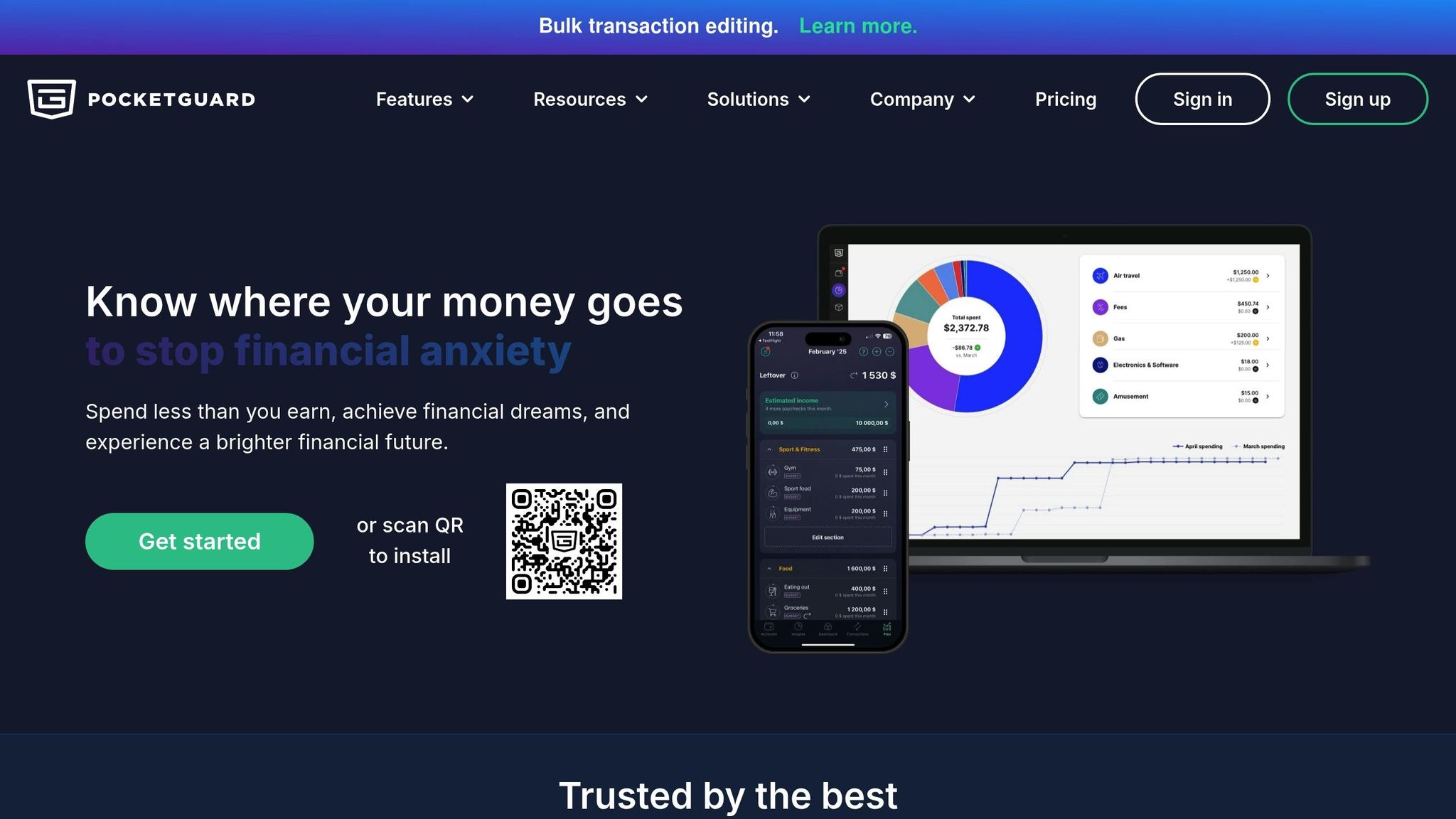
PocketGuard helps keep your spending in check by showing how much money you have left after covering bills, savings goals, and essential expenses.
Smart Budgeting Features
PocketGuard uses advanced technology to simplify budgeting. Its "In My Pocket" feature calculates your available funds in real time, factoring in upcoming bills, savings targets, and recurring expenses. This feature adjusts dynamically, giving you a clear picture of what you can safely spend at any moment.
The app also keeps an eye on your recurring payments, notifying you of price changes or forgotten subscriptions. It learns from your spending habits to automatically sort expenses into categories like groceries, entertainment, and transportation, offering a personalized approach to managing your budget.
These tools work alongside PocketGuard’s security measures, ensuring you stay informed and in control of your finances.
Bank Integration and Data Security
PocketGuard connects securely with over 10,000 U.S. financial institutions, using encryption and read-only access to protect your information. It adheres to U.S. banking regulations and employs the same security protocols banks use to safeguard customer data.
Your login credentials are never stored on PocketGuard’s servers. Instead, connections to your accounts are managed through secure third-party services, ensuring your financial information remains private.
Pricing Options
PocketGuard offers a free version with essential features like spending tracking and bill reminders. For more advanced tools, you can upgrade to PocketGuard Plus for $12.99 per month or $74.99 annually. The premium version includes features like debt payoff plans, customizable spending categories, and the ability to export data.
One standout feature of the premium plan is its debt management tool, which creates tailored strategies to help you pay off debt and tracks your progress toward financial freedom.
Why It’s Great for U.S. Users
PocketGuard is especially helpful for avoiding overspending and overdrafts. Instead of overwhelming users with complicated budgeting systems, it focuses on one simple question: how much can you safely spend right now?
The app is a great fit for freelancers, gig workers, and anyone with irregular income, as it automatically adjusts for variable earnings. It also helps build emergency funds by setting aside small amounts based on your spending patterns and cash flow.
For families, PocketGuard makes it easy to manage joint accounts alongside individual ones. Couples can track their combined finances without separate logins or confusing account-sharing setups, offering a clear view of their overall financial health.
9. Goodbudget

Goodbudget takes a step back from automation and embraces a more traditional approach to budgeting. Inspired by the classic envelope budgeting system, it brings this method to the digital world. Users can manually allocate funds into virtual envelopes and track their spending, giving them a hands-on way to manage their finances. While the Premium plan includes features like automatic bank syncing for supported checking accounts, the app primarily caters to those who prefer a more manual and intentional budgeting process. Goodbudget stands out as a unique option for individuals seeking an alternative to AI-driven apps.
10. Quicken Simplifi
Quicken Simplifi is designed to make managing personal finances easier for users in the U.S., with features like direct integration with financial institutions and a strong focus on data security. This app streamlines financial tracking while ensuring that your information stays safe and up to date.
U.S. Bank Integration and Security
Quicken Simplifi connects with U.S. banks using an OAuth API, which allows for a one-way data transfer. This means it can import your financial information without making any changes to your bank records. Data is updated nightly, with an aggregation partner handling the process outside regular business hours.
When linking accounts, users log in through a secure, bank-hosted sign-in form. Credentials are encrypted and stored securely on the aggregation partner’s servers, while your financial data is hosted on Quicken’s servers. These measures ensure that your sensitive information stays protected at all times.
Compliance and Verification for U.S. Users
To meet U.S. financial regulations, Quicken Simplifi collects basic personal information for identity verification, following AML (Anti-Money Laundering) and CFT (Countering the Financing of Terrorism) guidelines. The platform also confirms account legitimacy by performing small test transactions - under $1.00 - on linked accounts. These transactions are managed through trusted third-party providers like Dwolla and Stripe, ensuring accuracy and compliance with regulatory standards.
App Comparison Table
Below is a breakdown of the top AI budgeting apps in 2025. The table highlights their features, pricing, security measures, and key advantages or drawbacks to help you quickly assess which app might suit your needs.
App | AI Features | Monthly Pricing | Bank Integration | Key Security Measures | Pros | Cons |
|---|---|---|---|---|---|---|
Mint | Smart categorization, spending alerts, credit score monitoring | Free | Multiple institutions | Advanced encryption and read-only access | Free; broad range of features | Service discontinued |
Cleo | AI chatbot assistant, spending insights, savings tracking | Subscription-based | Major U.S. banks | Advanced encryption | Interactive chatbot; useful budgeting tips | Limited investment tracking |
Personal Capital | Investment analysis, retirement planning, net worth tracking | Free basic with premium services | Multiple financial accounts | Two-factor authentication for added security | Excellent for investment tracking | Can feel complex for beginners |
Monarch Money | Smart categorization, goal tracking, family sharing | Subscription-based | Multiple institutions | Bank-grade security with encrypted storage | Clean design; great collaboration tools | Relatively higher cost |
Plum | Automated savings, spending analysis, investment suggestions | Subscription-based | Major U.S. banks | Secure API connections with regulatory oversight | Easy setup; automated saving | Limited budgeting categories |
Rocket Money | Subscription tracking, bill negotiation, spending insights | Variable pricing tiers | Multiple financial institutions | Enhanced encryption | Helps negotiate bills; great management tools | Pricing inconsistencies |
YNAB (You Need a Budget) | Goal-based budgeting, spending predictions, debt payoff planning | Subscription-based | Multiple banks | Secure cloud storage with advanced encryption | Zero-based budgeting; educational resources | Steep learning curve |
PocketGuard | Spending limits, bill tracking, savings opportunities | Free basic with premium options | Multiple U.S. institutions | Read-only bank access with encrypted connections | User-friendly; effective budgeting tools | Limited features in free version |
Goodbudget | Envelope budgeting, expense tracking, multi-device sync | Free basic with premium upgrade | Manual entry system | Secure cloud storage with encrypted data | Simple envelope system; no bank linking | Requires manual transaction entry |
Quicken Simplifi | Smart categorization, bill reminders, goal tracking | Subscription-based | Secure connection protocols | Advanced security with regular updates | Strong bank integration; reliable security | Limited AI-driven features |
Keep in mind that pricing and features may evolve over time. Some apps, like Mint, are no longer active, while others, like Personal Capital, offer both free and premium options for wealth management. Many subscription-based apps also provide discounts for annual plans.
Conclusion
Selecting the right AI budgeting app is all about finding one that aligns with your financial goals and habits. As AI continues to transform budgeting tools, these apps are becoming smarter and easier to use, offering features that cater to a wide range of financial needs. But it’s not just about the features - consider how each app fits into your overall financial plan.
Different apps are designed with unique strengths. Some focus on automated savings, while others emphasize straightforward spending tracking. Your choice should reflect what matters most to you - whether that’s setting clear spending limits, building savings, or managing investments - all while keeping your long-term financial objectives in mind.
Privacy is another critical factor. Before sharing sensitive information, take the time to review each app’s privacy policy to ensure your data is handled responsibly.
It’s also important to remember that AI tools are there to assist, not replace, your financial decision-making. Financial expert Lanesha Mohip emphasizes this point:
"Try to be as specific as possible about your savings goals. You can tell the AI an ideal goal time frame and a dollar amount, and the software will give you a plan."
Use these tools as a guide, combining their insights with your own judgment for smarter financial decisions.
Whether you’re considering a subscription-based service like Monarch Money or a free option like PocketGuard’s basic plan, the key is to choose an app that matches your budgeting style and comfort with technology. Take advantage of free trials to test features, and pair these apps with banking tools for real-time account monitoring and automated savings. With the right app, you’ll be better equipped to make informed financial choices and work toward your goals with confidence.
FAQs
How do AI budgeting apps ensure my financial data stays secure when connecting to my bank accounts?
AI budgeting apps are designed with your financial security in mind, employing top-tier encryption techniques and security protocols comparable to those used by banks. Many of these apps rely on 256-bit encryption, safeguarding your data whether it’s being transmitted or stored. On top of that, features like multi-factor authentication (MFA) provide an added layer of security when linking your bank accounts.
To further protect your finances, these apps leverage real-time monitoring powered by AI to spot unusual activity and help prevent fraud. With these robust measures in place, your sensitive financial data stays protected and private.
What’s the difference between paid AI budgeting apps and free ones?
Paid AI budgeting apps, such as Monarch Money, often offer features like tailored financial planning, detailed analytics, and a wide range of customization options - all for a subscription fee. On the other hand, free apps like PocketGuard focus on providing essential budgeting tools, tracking expenses, and maintaining an easy-to-use interface. These free apps are a great choice for those who value simplicity and want to avoid extra costs.
The key difference comes down to how much detail and personalization you need. Paid apps are designed for users who want deeper financial insights, while free options are perfect for managing basic budgeting tasks.
How do AI-powered budgeting apps make managing my finances easier than traditional methods?
AI-powered budgeting apps have transformed how people manage their finances by making the process easier, faster, and more accurate. These tools go beyond the old-school spreadsheets and manual tracking by offering customized insights, automating repetitive tasks, and reducing the chances of human error.
What sets these apps apart is their ability to analyze your spending habits, predict upcoming expenses, and suggest personalized strategies to help you save more effectively. Features like real-time updates, smart expense categorization, and automated reminders ensure you always know where your money is going. With these tools, managing your budget becomes less of a chore and more of a streamlined process, helping you make better financial decisions and reach your goals with less effort.